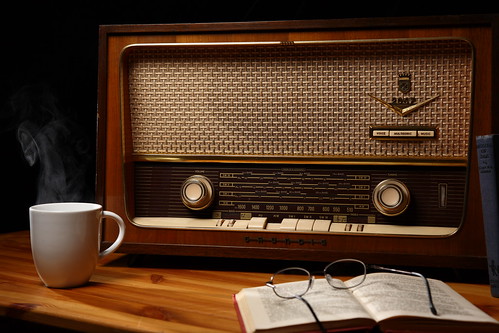
Nov 13, 2009
How to make your song stand out on the radio
There is a myth that in order to stand out on the radio, your song needs to be louder than anyone else’s.
Bollocks.
Maybe this was true during the first Loudness Wars, back when every Motown release was louder than the previous one, but not any more – not for a long time.
Radio stations use very aggressive multi-band compression to control the level of everything they broadcast, for two reasons:
- To ensure decent reception in low-signal areas and
- To even out any differences in playback volume without the DJ having to adjust everything “on-the-fly”
What this means is that really high-level CDs won’t sound any better on the radio, just more squashed and distorted.
Don’t believe me ? Read this:
Loudness means NOTHING on the radio – the proof
The Evidence
It really leapt out at me recently when I heard Paul Simon’s “50 Ways To Leave Your Lover” back to back with Lily Allen’s “22″ while I was driving home from work.
There was no obvious difference in volume, despite the fact that one is a pristine 70′s classic, whereas the other is a tragic current Loudness War casualty.
There was one other, very obvious sonic difference, though.
“Fifty Ways” sounded fantastic, and Lily sounded dreadful. Even more dreadful than it does on CD, because the song was already so loud that the broadcast compression was mauling it to death.
And Radio 2′s broadcast compression is mild, in comparison to most commercial UK stations, let alone in the US. An in fact, Lily’s album isn’t even that loud, by recent standards…
For more proof, check out my interview with the BBC about Metallica’s infamous “Death Magnetic”, in the side-bar over there on the right. The show includes two clips from the album, one of which had 14dB more dynamic range (!) than the other, before they were broadcast. Or, check out this blog post along similar lines.
So, how do you stand out on the radio these days ?
Simple.
Hit the “sweet spot” where your track is loud and punchy but still dynamic, and sits just underneath the broadcast compression thresholds. It will sound exactly the way you want, without any extra processing – and as a result a great deal more ear-catching than most modern releases, which will be fighting the limiter all the way to the scrapheap.
“But how loud is that ?!” I hear you cry. Well, sadly I can’t give you an exact answer to that – different radio stations use different amounts of compression and processing, so this is tough to call.
(I said it was simple, not easy !)
But if we take Lily and Paul as examples – our old friend the TT Dynamic Range Meter tells us that “50 Ways” has a dynamic range of 12dB or more for most of the song, as opposed to Lily who averages only 8dB in the choruses, down to 6dB for the really loud bits.
So my advice is, predictably enough – keep it dynamic.
A dynamic range of DR8 is the most compressed anything ever needs to be – and, I’m talking heavy rock there, not catchy pop like Lily. Stay in the DR14-DR10 range except for the very loudest bits and you’ll be doing just fine.
Of course, the very best (and easiest !) way to achieve this is to get your music professionally mastered by an engineer who knows what he’s up to.
Oh – you will also need great songs, catchy hooks, superb recordings and fantastic performances, but you knew all that already, right ?!
(Image by Ian Hayhurst)
Related posts:


.gif)


Disclaimer: I’m the guy that falls asleep during mixes in studios, so I’m not qualified to give technical advice. But I recently had to help someone get music online and we had to convert to MP3 and play it on tinny speakers. What was amazing (to me) is that acoustic jazz sounds better on an iPod than U2. Music that is well mixed and mastered survives compression. Will there come a day when bands will do separate MP3 mixes?
The other – more selfish – reason for advocating good mixing and mastering is that I want to hear the words! Another article perhaps?
Hi Ian,
Thanks for the advice on what DR range is needed. That’s really helpful.
Hoping that the senseless loudness war approach will be a footnote in history real soon. I don’t even want to think about all the musical nuances that got lost and sacrificed just to inflate the dB levels.
Great stuff, Ian. I stand corrected about the radio loudness stuff.
Have you ever taken a look at waveforms before and after going through massive radio compression. Regardless of whether the song has a TON of dynamic range (lots of peaks and dips in the waveform) or the song is compressed to the point of looking like a sausage, it still comes out looking the same on the other side of the radio compressors (squashed).
So you’re absolutely right, keep it nice and dynamic, and it’ll handle the radio mangling better than something that has already had the life squashed out of it.
@ Michael – Lossy compression works by throwing away the stuff you supposedly can’t hear. One simple way to choose what that “stuff” is, is to concentrate on the quiet material. A hugely compressed rock or pop track doesn’t have any quiet stuff to begin with, so immediately there’s a difficulty about deciding what to remove.
I hate it when people say you should squash music more before encoding to mp3 – the exact opposite is true. As a rule of thumb, the more open and dynamic the original, the better the encode will sound.
@ Marko – I couldn’t agree more. Hopefully before long everything will be lossless…
I’m amazed by budding producers who confuse data compression with audio compression..
“It’s not compressed, it’s a WAV”
and
“but I thought if it’s compressed it’s bad?”
..were recent examples I’ve heard.
I had recently the same experience will listening to radio while driving.
First pass was Lloyd Cole & The Commotions “My Bag” followed by U2′s latest “Get On Your Boots” single.
The diference in the snare, depth, and clarity between the songs was amazing.
[...] This post was mentioned on Twitter by Guitar Minovi, We Music Makers. We Music Makers said: How to make your song stand out on the radio #music http://bit.ly/qrBMM [...]
[...] that connects people with friends and others who work, study and live a… 2 Likes How to make your song stand out on the radio There is a myth that in order to stand out on the radio, your song needs to be louder than [...]
yep i couldn’t agree more on the radio compression. i recently tried out this on the visual point of view.
i recorded a radio recording into wav and compared to the CD ripped wav of a song from 1994 and view on soundforge, the song is tom petty – it’s good to be a king. of course as you all know that the verse is just as loud as the chorus on the radio compressed wav file and they also made it sound distorted from original recording. the little gently cymbol seems so loud now.
honestly i don’t like radio’s sound quality. i remember in the 80′s up till 1991. radio wasn’t so loud
Ian, What a great article technical but not impenetrable yet accessible without being patronising.. looking at your blog(s) I can see that is a consistent style for you. I enjoyed it immensely and will read more.. serendipitously discovered as you used my image to illustrate it
Cheers Ian
Hi Ian, Great to hear from you, and glad you like the blog. Your image is excellent, as soon as I saw it I knew it was right for the post – and in fact I’ve seen it used in a few other places around the web, too – nice job !
Ian
great read, I just discovered your blog and am learning a lot…
but I have a question: what if you’re producing electronic dance music? does this still apply? the whole point of this genre (well mostly) is to slam your audience with sound…
dynamic range seems like a bad idea in electronic music. I’d like your opinion on this, is it an exception to the rule?
or should you just use a smaller dynamic range? How do you do that when you’re dealing with massive assemblages of sounds?
Glad you like the blog !
Dance needs dynamics just as much as any genre. The heart of dance is the beat, and the beat is traditionally made by drums – one of the most dynamic instruments there is.
If you take all the dynamics out of a drum, you have no beat, therefore it won’t be danceable !
Of course the reality is that drums can sound great when you compress the hell out of them, but I still don’t think there’s any point in going louder than the DR8 sweet spot.
All my favorite-sounding dance music has plenty of dynamics – look at something like “Demon Days” by Gorillaz, or “Untrue” by Burial, or “Born Slippy” by Underworld, or “Heligoland” by Massive Attack, or “Play” by Moby, or “Discovery” by Daft Punk or “There Is Love In You” by Four Tet, or anything by Orbital… they all sound incredible, and I’ve never heard anyone complain they are two quiet.
Whereas I love the Chemical Brothers for example, but I’ve never loved their *sound* which has always been heavily over-compressed.
Of course it’s all about balance, as with anything else – too much dynamic range can be a problem, but a good DJ matches the loudness in the mix during a set – in that situation a more dynamic track will have deeper bass, more searing highs and lows and more punch overall than any hyper-compressed DR4 nonsense. Dynamic range is a secret weapon for dance music, just like everything other genre !
http://productionadvice.co.uk/loudness-war-secret/
Ian
I understand what you mean. But the problem is in my country, the radio will only accept track that are heavily limited like modern track, they refused to play anything that’s not as loud as commercial song.
[...] music sounds better on the radio – here’s the [...]